Voodoo and Spirituality: How New Orleans' Past Affects Its Haunted Present
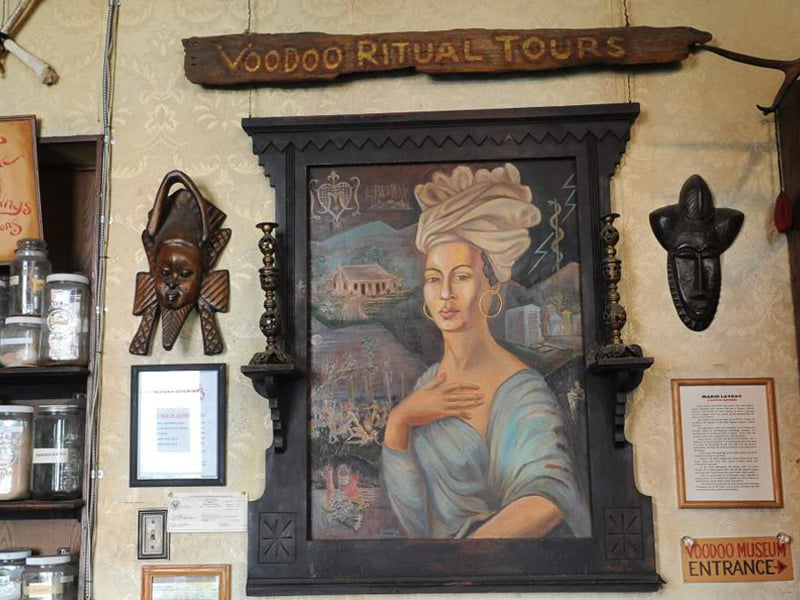
New Orleans has never been a city where the past feels particularly far away. Walk through the French Quarter, and history appears in layers: Creole townhouses stand along streets laid out centuries ago, old courtyards hide behind iron gates, and stories about people who lived generations earlier remain attached to particular buildings, alleys, and neighborhoods. In a place where memory is so deeply embedded in the landscape, it is easy to understand why New Orleans has also developed one of America's strongest traditions of ghost stories and supernatural folklore.
Voodoo is frequently pulled into those stories, although the real spiritual tradition is far more complicated than the spooky imagery found in movies, Halloween decorations, or souvenir shops might suggest. Louisiana Voodoo grew from a combination of African spiritual traditions, Catholic practices, Caribbean influences, and the experiences of people who created communities under extraordinarily difficult circumstances. Understanding that history adds another dimension to New Orleans' reputation as a haunted city because it reveals how religion, death, ritual, folklore, and everyday life became intertwined over several centuries.
What Is Louisiana Voodoo?
Louisiana Voodoo is a spiritual tradition that developed largely among enslaved and free people of African descent in colonial Louisiana. Many of the people brought to the region carried religious traditions from West and Central Africa, where relationships between the living, ancestors, spirits, nature, healing, and the sacred were often understood differently from the dominant European Christian worldview.
New Orleans was also connected to the Caribbean through migration, commerce, and the movement of enslaved and free populations. After the Haitian Revolution, thousands of refugees arrived in Louisiana from Saint-Domingue, bringing cultural and religious traditions that contributed to the city's already complex spiritual environment. Those influences encountered Catholicism, which was deeply rooted in Louisiana under French and Spanish colonial rule.
Over generations, elements of these traditions blended in ways that were distinctly Louisianan. Saints, candles, prayers, herbs, spiritual protection, ancestor traditions, and ritual practices could exist alongside one another rather than fitting neatly into a single religious category. That mixture is part of what makes Louisiana Voodoo difficult to reduce to the simple stereotypes that later popular culture attached to it.
Voodoo Was Never Just About the Supernatural
When Voodoo appears in horror movies, it is often reduced to curses, dolls, mysterious rituals, and ominous magic. Those images may make entertaining stories, but they provide an incomplete and frequently distorted picture of the religion and cultural traditions that developed in Louisiana.
For many practitioners, spiritual practices historically served practical purposes connected to protection, healing, guidance, relationships, luck, justice, and community. Herbal knowledge could exist beside prayer, while ritual practices might address concerns ranging from illness to personal conflict. Spirituality was not necessarily something separated from ordinary life. It could be woven directly into how people understood health, family, misfortune, and their relationship with the world around them.
That distinction matters when talking about haunted New Orleans. The city's supernatural reputation did not simply emerge because people practiced Voodoo. Rather, New Orleans developed within a culture where multiple traditions offered different ways of interpreting death, spirits, ancestors, and events that seemed difficult to explain.
Marie Laveau Became a New Orleans Legend
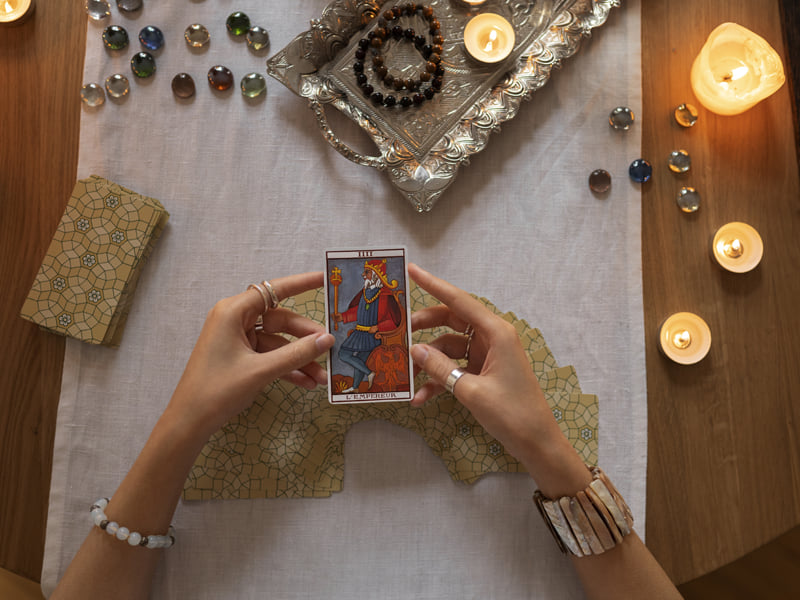
No discussion of New Orleans Voodoo can go very far without encountering Marie Laveau. Born in the early nineteenth century, Laveau became the city's most famous Voodoo figure, eventually earning a reputation so powerful that separating the historical woman from the legend surrounding her can be challenging.
Laveau was a free woman of color who worked as a hairdresser and became known for her religious and spiritual activities. Accounts of her life describe someone who developed connections throughout New Orleans society and became associated with healing, advice, ritual practices, and Catholic devotion. Over time, stories attributed seemingly extraordinary influence to her, creating the image of the "Voodoo Queen" that remains part of New Orleans folklore.
Her reputation continued growing after her death. Stories about her grave, her spirit, and attempts to petition her for favors helped transform Laveau from an influential historical figure into something larger: a symbol of the mysterious New Orleans that visitors still come hoping to understand.
Why Do Voodoo and Ghost Stories Overlap?
The connection between Voodoo and ghost stories becomes easier to understand when you consider how New Orleans historically approached death. Cemeteries, funerals, religious rituals, ancestor traditions, Catholic beliefs, African spiritual practices, and local folklore all contributed to a culture in which death could remain visibly connected to community life.
That does not mean every New Orleans ghost story has something to do with Voodoo. In fact, most do not. The French Quarter has accumulated haunting legends involving murders, fires, epidemics, war, family tragedies, famous residents, and unexplained events that come from many different periods of the city's history.
Still, Voodoo introduced spiritual concepts that fascinated outsiders, especially visitors who were unfamiliar with African-derived religious traditions. Newspaper stories, travel accounts, sensational literature, and eventually movies often blurred Voodoo practices together with ghosts, witchcraft, and supernatural horror. That mixture helped create the popular image of New Orleans as a place where almost anything might be waiting beyond the ordinary world.
New Orleans Has Always Lived Close to Death
Few cities have a historical relationship with mortality quite like New Orleans. Yellow fever epidemics repeatedly swept through the population during the eighteenth and nineteenth centuries, sometimes killing thousands of people during particularly devastating outbreaks. Hurricanes, fires, flooding, violence, and other disasters added to a collective memory filled with sudden loss.
The city's famous aboveground tombs also make death unusually visible. Instead of cemeteries disappearing quietly behind flat fields of headstones, many historic New Orleans burial grounds contain walls of tombs, family vaults, monuments, and narrow pathways that can feel almost like miniature cities. The dead remain physically present in the landscape.
When generations grow up hearing stories connected to particular houses, cemeteries, courtyards, and streets, those places naturally accumulate legends. A strange sound in an old building may eventually become attached to someone who once lived there. A dramatic historical event may produce stories about a spirit that refuses to leave. Whether someone interprets those stories as paranormal experiences, folklore, or simply part of New Orleans culture, they help keep the city's history alive.
Spiritual Traditions Shaped the City's Identity
New Orleans has long been a meeting point for cultures that viewed religion and spirituality differently. Catholic traditions existed beside African-derived practices, while Caribbean influences introduced additional beliefs, rituals, music, and approaches to the spiritual world. Protestant communities, Spiritualists, folk healers, occult movements, and other traditions eventually contributed their own ideas as well.
Because these traditions interacted for generations, New Orleans developed a spiritual culture that can be difficult to categorize neatly. Someone might attend Catholic Mass while also participating in practices that reflected African or Caribbean traditions. A household might use candles, saints, prayers, herbs, charms, or other spiritual objects without viewing those practices as contradictory.
That cultural flexibility helped produce the New Orleans many visitors recognize today, where churches, cemeteries, Voodoo shops, historic homes, and ghost stories can exist within a few blocks of one another.
How Much of Haunted New Orleans Is Folklore?
Quite a lot, and that is part of what makes the subject fascinating. Ghost stories change as people repeat them, particularly when generations of storytellers add details, interpretations, and dramatic flourishes. New Orleans has had more than enough time for that process to occur.
Some haunted locations are connected to well-documented historical events, while other stories rely more heavily on oral tradition or accounts that appeared decades after the supposed events occurred. Certain legends combine genuine historical people with details that are much more difficult to verify.
Recognizing that difference does not ruin a good ghost story. In many ways, it makes the stories more interesting because folklore reveals what communities choose to remember, fear, exaggerate, or preserve. A haunting can tell you something about a city's history even when you remain skeptical about the ghost itself.
Voodoo Dolls Are Not the Whole Story
Few objects are more closely associated with popular stereotypes about Voodoo than the so-called Voodoo doll. Movies commonly portray someone sticking pins into a small figure to magically injure another person, but that image does not accurately summarize Louisiana Voodoo.
Figures, charms, gris-gris bags, candles, herbs, and other physical objects can have spiritual significance in different folk traditions, although their purposes are much broader than causing harm. Objects might be associated with protection, healing, luck, love, or prayer.
The pin-filled doll popularized by entertainment owes much of its fame to sensational depictions rather than an accurate representation of Voodoo practice. Understanding that difference allows visitors to appreciate the real history without losing the mysterious atmosphere that made these stories famous in the first place.
Why Does the French Quarter Feel So Haunted?
Architecture certainly helps. The French Quarter contains buildings that have survived generations of residents, businesses, fires, celebrations, disasters, and social change. Narrow streets, hidden courtyards, old balconies, shuttered windows, and dimly lit passages already create the perfect setting for a ghost story.
History provides the rest. People have lived densely within these blocks for centuries, meaning almost every street has witnessed births, deaths, arguments, romances, crimes, celebrations, epidemics, and tragedies. Stories naturally become attached to those places.
Walking through the Quarter after dark can therefore feel like moving through several versions of New Orleans simultaneously. The restaurants, bars, and music belong to the present, while the architecture and stories constantly point backward.
Explore the Spiritual Side of the French Quarter
French Quarter Phantoms offers a French Quarter Voodoo tour for visitors who want to explore this fascinating side of New Orleans while learning about the history behind the legends. Rather than treating Voodoo simply as a spooky prop, exploring its cultural background helps explain why spirituality has remained such an important part of the city's identity. Once you begin looking beneath the surface, the haunted New Orleans of today starts to look less like an isolated collection of ghost stories and more like the continuation of a past that the city has never completely left behind.
THE VOODOO LOUNGE, 718 N RAMPART STREET, NEW ORLEANS LA 70116
504-666-8300 | PRIVACY POLICY