Creepy Creatures and Folklore in Louisiana
Louisiana has a way of making ordinary places feel like they are holding their breath, especially once the sun drops and the air turns thick, sweet, and a little electric. The state’s folklore does not feel like something you read in a dusty book, because it still lives in porch conversations, in family warnings, and in the little sideways glances people give a dark stretch of road. Even if you are the type who says you are “not into spooky stuff,” Louisiana has a talent for pulling you into a story before you realize you are listening.
Part of the fun is that these tales rarely sit still, because every retelling adds a detail that makes it more local, more personal, and more believable. One person swears they heard the sound, another person insists they saw the shape, and someone’s cousin knows someone who “would never lie about this.” That is how you end up with a living map of creepy creatures, haunted history, and cultural memory that feels as tangled as the roots in a cypress swamp. If you want to understand the vibe of the state, it helps to meet the monsters it raised.
Why Do Louisiana Stories Hit Different?
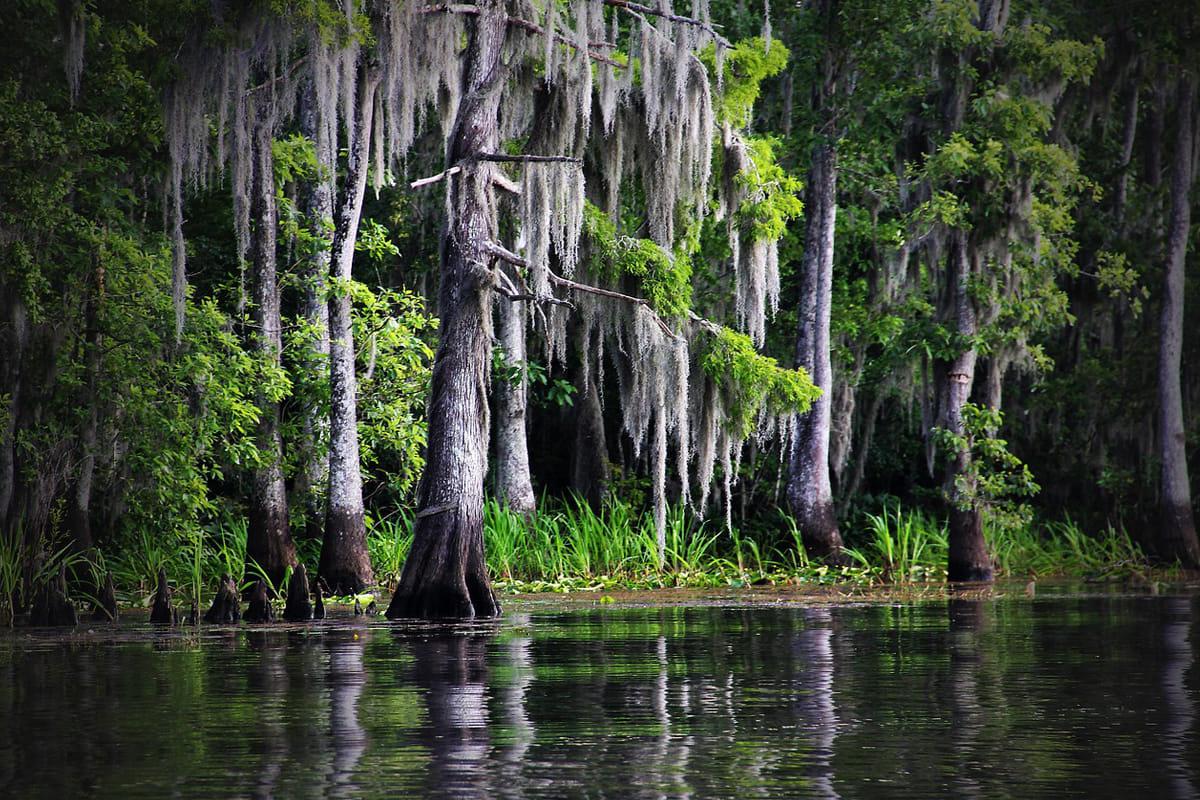
Louisiana’s landscape does half the storytelling for you, because swamps, bayous, and moss-draped trees naturally invite your imagination to fill in the blanks. A place like the Atchafalaya Basin is beautiful in daylight, yet it can feel endless at night, when every splash could be a fish or something that does not want you there. Heat and humidity can also blur your senses, since fatigue and shadows make the mind connect dots that might not be connected. Stories grow best in places where the world already feels a little unreal.
Culture does the other half, because Louisiana is a meeting point where French, Spanish, African, Caribbean, Native, and American traditions have all left fingerprints on the same set of legends. In New Orleans, you will hear tales that mix faith, fear, humor, and history in the same breath, which is why the folklore feels both playful and serious. A warning about a creature can be a moral lesson, a joke, and a survival tip at the same time. When a story carries that many layers, it sticks.
The Rougarou Is Not Just a Monster
The Rougarou sits at the center of Cajun and Creole storytelling like a stubborn shadow that refuses to be chased away. The legend connects to older French tales of the loup-garou, yet Louisiana gave it a personality that fits the swamps and back roads, where isolation can make any sound feel like a threat. In many versions, the Rougarou is a shapeshifter, sometimes wolf-like, sometimes something stranger, and the uncertainty is the point. A creature that cannot be pinned down is scarier than one with a clear silhouette.
What makes the Rougarou especially Louisiana is how practical the fear can be, because the story often works like a boundary marker. Adults used it to keep kids from wandering into the woods, disappearing into the cane fields, or exploring the water’s edge where a slip could turn deadly. The tale also carries a social edge, since some versions tie the curse to breaking rules or ignoring community expectations. A monster that punishes reckless behavior tends to survive in a place where the environment does not forgive mistakes.
Who Is Watching from Honey Island Swamp?
The Honey Island Swamp has its own homegrown legend, the Honey Island Swamp Monster, which people describe as big, shaggy, and unsettlingly human in its movement. Stories of strange tracks and glimpses through the trees have been floating around for decades, and the swamp setting makes every report feel plausible. Dense brush hides details, water distorts sound, and distance turns ordinary animals into silhouettes with attitude. Once a legend takes hold in a place like that, the swamp seems to cooperate.
A big reason these sightings stick is that swamp wildlife already looks prehistoric, especially when you catch it at the wrong angle or in bad light. Alligators can feel like dinosaurs, wild boar can move like tanks, and a startled deer can crash through brush in a way that sounds far too big to be normal. When you mix that with fog, mosquitoes, and the uneasy feeling of being watched, your brain starts building a story as a form of self-defense. Folklore sometimes starts as the mind’s way of giving a name to a threat you cannot identify.
The most interesting part is not whether the monster is “real” in a scientific sense, but what the legend says about the relationship between people and the swamp. Locals respect the wetlands because they feed communities, protect shorelines, and hold history, yet they also demand caution. The monster becomes a symbol of the swamp’s power, reminding everyone that nature does not exist for your comfort. Even skeptics tend to lower their voice when they talk about it, which tells you the story is doing its job.
Little People, Big Attitude: The Grunch
New Orleans folklore has a mischievous streak, and the Grunch fits right into that mood with a legend that feels like a whispered dare. Depending on who is telling it, the Grunch might be a small, goblin-like creature, a band of troublemakers, or a weird mix of both, often connected to the Irish Channel and the edges of the city. Stories paint the Grunch as sneaky rather than powerful, which makes it creepier in a different way, because small things can slip into spaces you thought were safe. A creature that hides in the margins feels uncomfortably close.
The Grunch legend also shows how city folklore works, because it grows around neighborhoods, social tensions, and the fear of what you cannot quite see. People used the story to explain missing items, strange noises, or the uneasy feeling that something is moving just beyond the streetlight. Some versions even hint at “rules” for dealing with them, like leaving offerings or minding your business, which is the kind of detail that makes a tale feel lived-in. When a story comes with etiquette, it starts sounding like it has been tested.
Manchac Swamp and the Ghost Stories That Will Not Sink
Manchac Swamp has a reputation that clings to it like mist, partly because the area’s history is full of storms, displacement, and tragedy. One of the most repeated legends ties the swamp to a woman whose voice carried a curse, with locals describing strange sounds, odd lights, and an atmosphere that turns heavy without warning. Swamps already feel like places where time gets stuck, because water preserves and erases in the same motion. When you add a story of grief or anger, the setting becomes a stage.
Ghost tales around Manchac also highlight how Louisiana haunting stories often blend history with atmosphere rather than relying on simple jump scares. People talk about hearing music where there is no party, seeing a glow where there is no road, or feeling a sudden chill that does not match the weather. Those details sound small, yet they are exactly the kind of sensations that make you question your own senses. When a place makes you doubt yourself, it does not need a loud apparition to feel haunted.
Marie Laveau and the Power of a Legend
If you spend any time in French Quarter conversations, you will eventually hear the name Marie Laveau spoken with a mix of respect and curiosity. She was a real person with a real life, yet the folklore version of her has grown into something bigger than history alone can hold. Stories describe her as healer, leader, mystic, and strategist, depending on who is talking and what they need the legend to be. That flexibility is part of why she remains so central to local lore.
Legends like hers also reveal how folklore can protect community memory, because the story carries themes of power, survival, and influence in a world that tried to limit all three. People argue over details, yet the argument itself keeps the tale alive, which is a kind of immortality. A figure who becomes a symbol does not disappear, even when the facts get blurry around the edges. In Louisiana, blur is not a flaw, because it is where imagination and identity meet.
Is LaLaurie Mansion Actually Haunted?
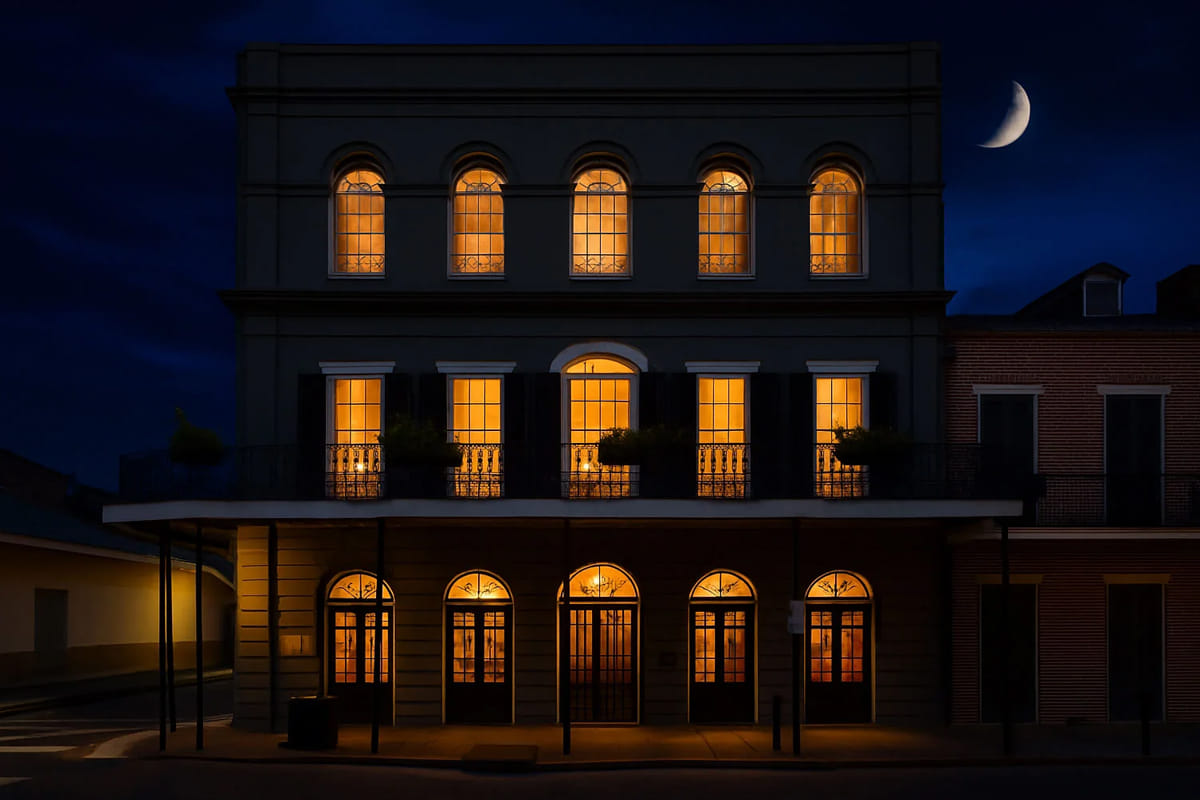
The story of LaLaurie Mansion is one of the darkest threads in New Orleans haunted history, because it is rooted in real cruelty and real suffering. That foundation changes the tone of the folklore, since people are not only chasing a thrill, they are also wrestling with a place where human choices created horror. Haunted talk around the mansion often includes reports of screams, cold spots, or oppressive feelings, and those details feel believable because the history is already heavy. A building does not need a ghost to carry dread, because memory can do that on its own.
It helps to approach stories like this with honesty, because the “haunted” label can sometimes distract from the reality of what happened. Folklore tends to compress complicated history into a dramatic image, and that can make it easier to consume, even when it should be uncomfortable. A respectful approach acknowledges that people suffered, while still recognizing that communities create ghost stories as a way to process pain. In that sense, the haunting becomes less about spectacle and more about the past refusing to stay buried.
Ready to explore? Book a French Quarter Phantoms walking tour in New Orleans and experience these legends where they were born, with guides who bring the history and hauntings to life step by step.
Cemeteries, Casket Girls, and the Art of Remembering
Louisiana cemetery lore is a perfect example of how practical realities can become folklore, especially in New Orleans where above-ground tombs create a landscape that looks like a stone city inside the city. The sight alone sparks stories, because the architecture feels theatrical, even when it is simply responding to soil and water conditions. Visitors walk through and start imagining who might be listening, who might be lingering, and what might happen after dark. When a place looks like a set, people naturally expect a script.
The Casket Girls legend also floats through local storytelling, often described as young women who arrived carrying small “caskets” filled with belongings, which then became a spooky rumor about vampires. The tale is sticky because it has just enough historical texture to feel plausible, even when it gets exaggerated into something supernatural. Folklore loves a misunderstanding, because a misread detail becomes an open door for imagination. Stories like this show how New Orleans blends romance, fear, and history into a single dramatic package.
The Devil in the Details: Crossroads, Bridges, and Back Roads
Outside the city, Louisiana folklore leans into the quiet places, the kind you drive through with your windows up even when the night is warm. Crossroads stories show up across many cultures, and Louisiana gives them a local accent, tying them to deals, temptations, and warnings about wandering too far from the familiar. A crossroads is unsettling because it is literally a choice point, which makes it easy to imagine something waiting there to influence your decision. Fear often clings to places where direction feels uncertain.
Bridges and back roads collect their own legends because they are transitional spaces, where you are neither here nor there, and that in-between feeling is where stories thrive. People talk about ghost lights, phantom footsteps, and sudden knocks that disappear when you pull over, and the details change depending on the parish, the family, and the decade. Rural folklore often travels through generations like a family recipe, with small edits that reflect new fears. The result is a patchwork of haunted geography that feels personal, because someone always knows the “real” spot.
How Do You Chase the Creepy Without Losing the Plot?
Exploring Louisiana folklore is more fun when you treat it like cultural travel instead of a scavenger hunt for shock value. Stories come from real communities, real histories, and real places, which means a little respect goes a long way, especially when a legend overlaps with tragedy. Good curiosity asks, “What does this story mean here?” rather than “How can I make this story about me?” That shift makes you a better listener, and Louisiana rewards good listeners.
Safety matters too, because the environment that inspires these stories can also be dangerous in very ordinary ways. Swamps are not theme parks, abandoned sites are not playgrounds, and private property rules still apply even when you are convinced a ghost is calling your name. A smart approach keeps you on public routes, stays aware of weather, and remembers that darkness changes your depth perception fast. Folklore is supposed to give you chills, not a rescue bill.
Take a Walk with French Quarter Phantoms
If you want to experience Louisiana creepiness with context, the easiest win is letting a guide connect the dots for you. A good tour can separate what is documented from what is whispered, then show you how both kinds of stories shape the same streets. The French Quarter Phantoms approach keeps things friendly and story-forward, which matters because the best ghost tales are not just scary, they are entertaining, layered, and local. Walking also changes how a story lands, because you feel the scale of the streets, the shadows, and the silence between blocks. If creepy creatures, haunted history, and strange local legends sound like your kind of night, French Quarter Phantoms is a solid way to explore the spooky side of New Orleans while staying grounded in the culture that created it.
THE VOODOO LOUNGE, 718 N RAMPART STREET, NEW ORLEANS LA 70116
504-666-8300 | PRIVACY POLICY