The History of Ghost Sightings at the Most Famous New Orleans Landmarks
New Orleans has never been the kind of city that keeps its history neatly tucked away in museums, because here, the past seems to lean out of iron-laced balconies, drift through candlelit courtyards, and whisper from buildings that have watched centuries of joy, disaster, celebration, and grief pass through their doors.
For visitors, the city’s ghost stories are often part of the fun, yet for locals and historians, these tales are also a strange kind of memory, preserving the names, tragedies, rumors, and mysteries that helped shape the French Quarter into one of the most haunted-feeling places in America.
At French Quarter Phantoms, we know that ghost sightings in New Orleans are rarely just simple stories about things that go bump in the night, because behind almost every famous haunting is a real landmark, a real piece of history, and a city that has always blurred the line between the living and the dead.
Why Is New Orleans So Famous for Ghost Sightings?
New Orleans has a long, layered history that makes it especially fertile ground for ghost stories, since French, Spanish, African, Caribbean, Catholic, Creole, and American influences all collided here in ways that shaped the city’s architecture, religion, burial customs, music, food, and folklore.
The city also endured repeated fires, epidemics, hurricanes, wars, yellow fever outbreaks, slavery, crime, political upheaval, and personal tragedies, which means that many of its most beautiful landmarks are connected to stories of sudden death, unresolved grief, and dramatic lives that ended before their time.
Although skeptics may view ghost sightings as legend, entertainment, or the natural result of old buildings settling in a humid climate, there is no denying that New Orleans has a rare ability to make history feel present, especially after dark, when the gas lamps glow and the French Quarter seems to grow quieter without ever feeling empty.
The LaLaurie Mansion Remains the City’s Most Infamous Haunted House
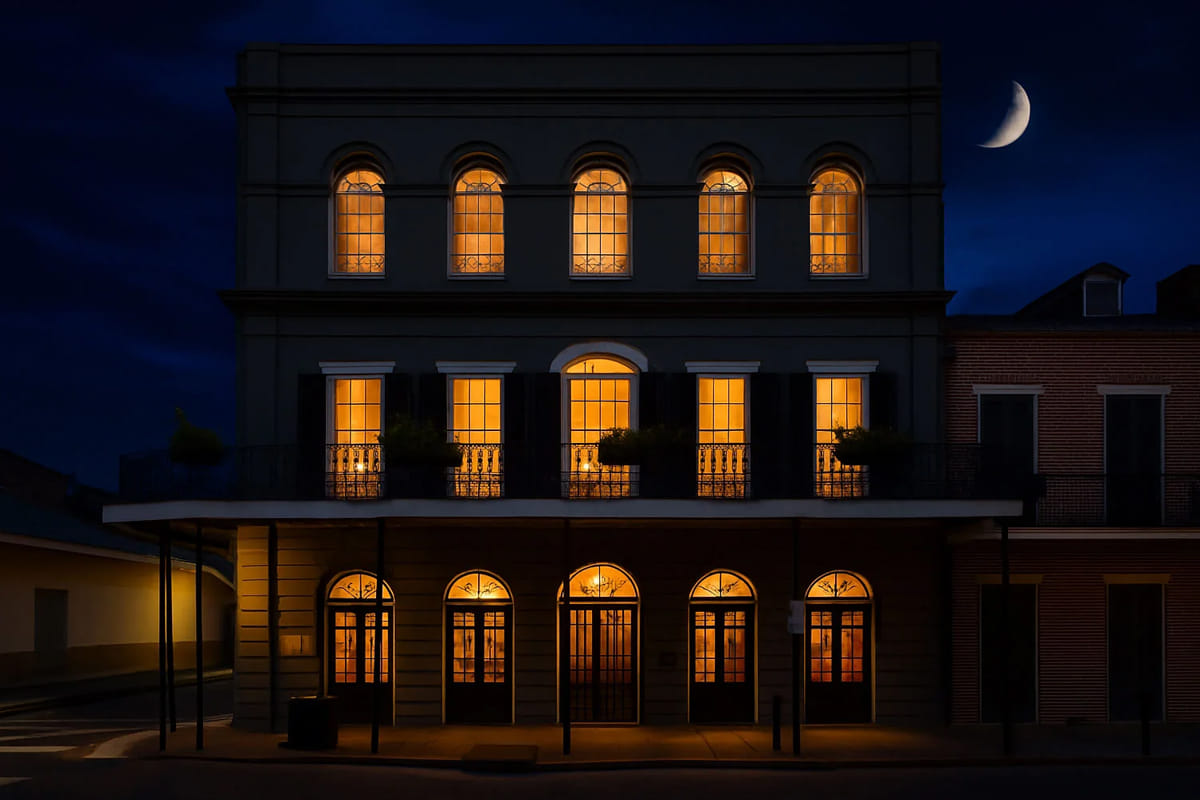
Few New Orleans landmarks are as closely associated with horror as the LaLaurie Mansion, the grand Royal Street residence connected to Madame Delphine LaLaurie, a wealthy Creole socialite whose elegant public image collapsed after reports of cruelty inside her home became part of the city’s darkest folklore.
According to the most familiar version of the story, a fire broke out at the mansion in 1834, and when neighbors entered the property, they allegedly discovered evidence of horrific abuse inflicted on enslaved people, a revelation that caused public outrage and turned the house into a symbol of hidden evil behind polished French Quarter beauty.
Over time, ghost sightings at the LaLaurie Mansion have included reports of screams, shadowy figures, cold spots, and the feeling of being watched from the upper windows, and while many details of the story have been retold, embellished, and debated, the building’s reputation remains so powerful that even people who know little about New Orleans hauntings often recognize its name.
What Makes St. Louis Cemetery No. 1 So Legendary?
St. Louis Cemetery No. 1 is one of the most famous burial grounds in New Orleans, partly because its above-ground tombs create an unforgettable landscape, and partly because it is associated with some of the city’s most enduring legends, including stories connected to Marie Laveau, the famed Voodoo Queen of New Orleans.
Because New Orleans has a high water table, above-ground burial became a practical and cultural feature of the city, yet the resulting cemeteries feel almost like small cities of the dead, with narrow walkways, family tombs, crumbling plaster, engraved names, and a silence that can feel unusually heavy even in broad daylight.
Ghost sightings and supernatural claims around St. Louis Cemetery No. 1 often involve apparitions near tombs, strange sensations, unexplained footsteps, and stories of visitors asking favors from Marie Laveau, whose reputation has grown into a mixture of documented history, spiritual reverence, tourist fascination, and local myth.
Marie Laveau’s Legend Still Shapes the Haunted History of New Orleans
Marie Laveau was a real woman, a free woman of color, a hairdresser, a spiritual figure, and one of the most famous names in New Orleans history, yet the stories surrounding her have become so layered that it can be difficult to separate biography from legend.
She is often remembered as a powerful Voodoo practitioner who held influence across racial, religious, and social lines, and while sensationalized accounts have distorted her life over time, her connection to healing, ritual, Catholic symbolism, and community power remains central to the city’s spiritual folklore.
Many ghost stories connected to Marie Laveau describe her spirit appearing in white, moving through the cemetery, or continuing to watch over those who seek her help, and whether people approach these stories as faith, folklore, or haunted history, her presence remains one of the strongest threads in New Orleans’ supernatural identity.
Jackson Square Looks Peaceful, but Its Past Is Complicated
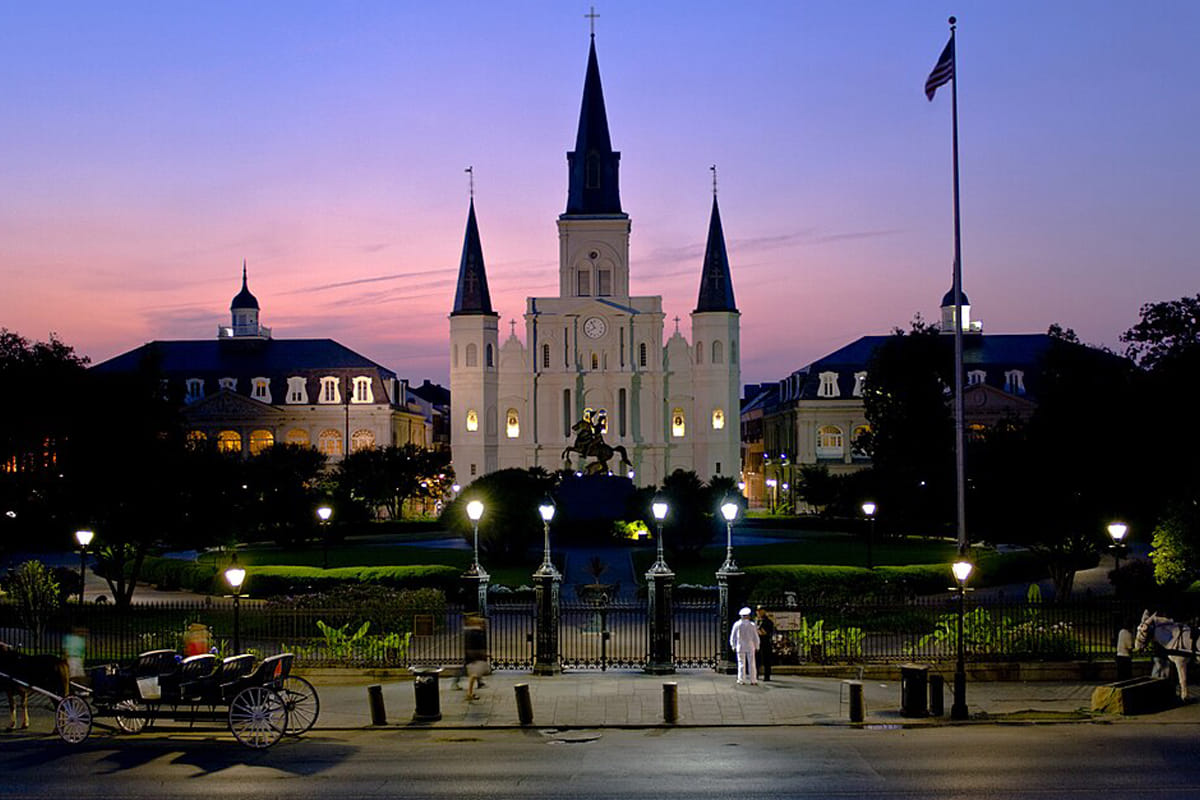
Jackson Square is one of the most photographed places in New Orleans, with St. Louis Cathedral rising above the square, artists lining the fence, musicians filling the air, and visitors gathering beneath the shade of old trees, yet the area’s cheerful appearance does not erase its long and complicated past.
Before it became the postcard image of the French Quarter, the square was known as the Place d’Armes, a public gathering place where military ceremonies, civic events, punishments, and executions were part of life in the colonial city.
Because of that history, some ghost sightings around Jackson Square involve reports of shadowy figures, sudden chills, and the eerie feeling that the public space is still holding onto memories of the people who once stood there for reasons far more serious than sightseeing.
Does St. Louis Cathedral Have Ghost Stories?
St. Louis Cathedral, one of the most recognizable landmarks in New Orleans, is usually associated with worship, weddings, architecture, and the city’s Catholic heritage, but it also appears in haunted New Orleans lore because of its age, its location, and its connection to generations of the faithful.
Churches often become centers of ghost stories because they are places where people bring grief, hope, confession, fear, and remembrance, and in a city as old and spiritually complex as New Orleans, it is easy to understand why the cathedral feels larger than ordinary history.
Some stories describe ghostly clergy, unexplained movement, or strange sensations near the cathedral and surrounding alleys, though the power of the site may come less from one famous apparition and more from the feeling that centuries of prayer and mourning have soaked into the stones.
The Cabildo Carries the Weight of Law, Fire, and Judgment
Beside St. Louis Cathedral stands the Cabildo, a landmark best known for its role in colonial government and the Louisiana Purchase, but the building’s history also includes courts, legal proceedings, imprisonment, and fire, all of which make it a natural part of the city’s haunted landscape.
Ghost stories connected to places of law and punishment often feel different from household hauntings, because they suggest not only personal tragedy but also public judgment, with the emotional weight of verdicts, punishments, and political power lingering long after the people involved have disappeared.
Visitors and storytellers have associated the Cabildo and nearby buildings with unexplained sounds, uneasy feelings, and the sense that some pieces of New Orleans’ legal and colonial past remain restless, especially when the busy daytime crowds have faded from the square.
The Bourbon Orleans Hotel Has a Deeply Haunted Reputation
The Bourbon Orleans Hotel is often listed among the most haunted hotels in New Orleans, and its reputation makes sense when you consider the building’s long life as a theater, ballroom, convent, school, and hotel, with each era leaving behind a different emotional imprint.
Stories from the hotel include sightings of a ghostly little girl, mysterious ballroom activity, apparitions in hallways, and unexplained sounds that seem to belong to an earlier age, when the building was filled with music, formal dances, religious instruction, illness, and loss.
What makes the Bourbon Orleans especially interesting is that its hauntings are not tied to only one story, because the building’s many identities allow visitors to imagine several different pasts overlapping in the same rooms, which is exactly the kind of layered history that gives New Orleans ghost sightings their distinctive character.
Hotel Monteleone Is Haunted with Literary Style
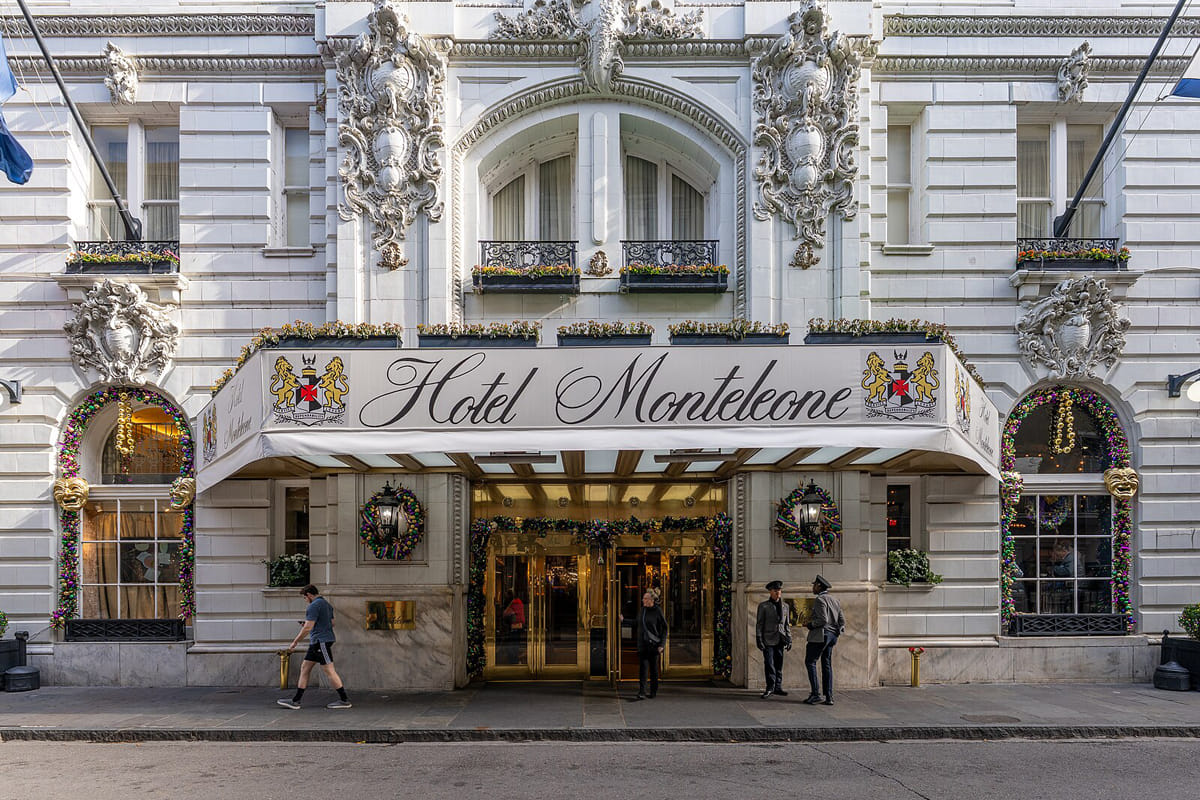
Hotel Monteleone is famous for its elegant Carousel Bar, its long literary connections, and its place in French Quarter hospitality, but it also has its share of ghost stories, many of which are less gruesome than the tales attached to darker landmarks.
Guests have reported unusual elevator activity, childlike apparitions, and unexplained presences, and the hotel’s haunted reputation has become part of its charm, especially for visitors who like their ghost stories served with old-world atmosphere rather than outright terror.
Unlike some haunted landmarks that feel grim or unsettling, Hotel Monteleone carries a more refined kind of mystery, as though the spirits said to linger there are simply reluctant to check out of a place that has hosted so much conversation, celebration, and creativity.
Muriel’s Jackson Square Honors Its Resident Spirit
The most famous spirit associated with the building is usually said to be Pierre Antoine Lepardi Jourdan, a former owner who allegedly lost the property in a card game and died by suicide, leaving behind a tragic story that became attached to the building’s later reputation.
Today, Muriel’s is known for honoring its resident ghost with a reserved table, which gives the haunting an oddly hospitable New Orleans quality, since even the dead, according to local tradition, deserve a proper place at dinner.
Lafitte’s Blacksmith Shop Feels Like a Doorway to the Past
Lafitte’s Blacksmith Shop is one of the most atmospheric landmarks in the French Quarter, with its low light, weathered structure, and connection to the pirate Jean Lafitte, whose name alone is enough to stir up stories of smuggling, secrecy, and danger.
Although the building’s exact historical details are often debated, its reputation as an old and mysterious gathering place has made it a favorite setting for ghost stories, especially those involving shadowy figures, unexplained movement, and the sense that someone from another century may still be watching from a dark corner.
Part of the reason Lafitte’s feels haunted is visual, because the building looks like it belongs to an earlier New Orleans, and when a place already appears half-removed from the modern world, it does not take much for the imagination to fill the room with pirates, criminals, and restless spirits.
The Old Ursuline Convent Has One of the City’s Strangest Legends
The Old Ursuline Convent is one of the oldest surviving buildings in the Mississippi Valley, and its history as a religious institution gives it a very different haunted atmosphere from the city’s hotels, bars, and mansions.
One of the strangest legends connected to the convent involves the so-called Casket Girls, young women sent from France to colonial Louisiana, whose small chests supposedly gave rise to vampire rumors in later folklore.
Although the vampire version of the story is more legend than documented fact, the Old Ursuline Convent remains a fascinating landmark because it shows how New Orleans ghost stories often grow from real historical circumstances, then become more dramatic as generations retell them.
The Sultan’s Palace Is Wrapped in Mystery and Violence
The Gardette-LaPrete House, often called the Sultan’s Palace in ghost lore, is connected to one of the French Quarter’s most sensational legends, involving a mysterious foreign resident, lavish parties, and a gruesome massacre that allegedly left the house soaked in blood and rumor.
Historians have questioned many details of the story, but that has not stopped the legend from becoming one of the city’s favorite tales, because it combines everything a haunted New Orleans story needs: wealth, secrecy, violence, scandal, and a beautiful building with a disturbing reputation.
Ghost sightings connected to the house often involve strange sounds, uneasy feelings, and stories of lingering spirits tied to betrayal or murder, and whether the tale is taken literally or as folklore, it remains one of the most dramatic examples of how the French Quarter turns mystery into memory.
Why Do These Stories Continue to Matter?
Ghost sightings at famous New Orleans landmarks continue to matter because they give people a way to talk about history emotionally, not just factually, and that is especially important in a city where beauty and tragedy have always lived close together.
A haunted story can preserve the memory of a person, a crime, a social injustice, a vanished way of life, or a building’s forgotten purpose, even when the details become blurred by time, tourism, and repeated storytelling.
That does not mean every ghost story should be treated as literal fact, but it does mean these legends have cultural value, because they reveal what people remember, what they fear, what they regret, and what they still find powerful about the places they pass every day.
Explore Haunted New Orleans with French Quarter Phantoms
The best way to experience haunted New Orleans is not simply to read a list of ghost sightings, because the city’s stories become far more vivid when you are standing near the balconies, courtyards, cemeteries, and shadowed streets where they are said to have happened.
Whether you are fascinated by the LaLaurie Mansion, curious about Marie Laveau, drawn to haunted hotels, or simply hoping to feel that unmistakable French Quarter chill after sunset, New Orleans has a ghost story waiting, and some of its most famous landmarks are still more than willing to tell it.
THE VOODOO LOUNGE, 718 N RAMPART STREET, NEW ORLEANS LA 70116
504-666-8300 | PRIVACY POLICY